
New US Entry Rules: What Is Changing for German Travelers
As of November 11, 2026, no suspension of visa-free travel for Germans has been announced. This regularly updated status page shows which US entry rules are new, which are planned and what the U.S. deadline of December 31, 2026 means for ESTA.
Contents
- New US entry requirements: what applies, what is planned?
- December 31, 2026 deadline: what happens to visa-free travel?
- What is the USA asking for?
- How far have the negotiations progressed?
- What happens after the deadline?
- In parallel: sharing of criminal records
- What does this mean for your travel plans?
- What has changed for ESTA?
- ESTA fee: 40.62 US dollars since October 16, 2026
- Social media in the ESTA application: proposed, not in effect
- What is new for visa applicants?
- The in-person interview is the rule again
- Applying in your country of nationality or residence
- Public social media profiles for certain visas
- Visa Integrity Fee: adopted, collection unclear
- What applies to dual nationals and travelers without a German passport?
- What to expect on arrival
- Photo on entry and exit
- Searches of phones and laptops
- Travel advice from the German Foreign Office
- Ebola entry ban
- What you can do now
- Changes to this page
As of November 11, 2026, no suspension of visa-free travel for Germans has been announced: with a German passport, you can still travel to the USA with ESTA for vacations, family visits and business meetings of up to 90 days. What has changed is mainly cost and screening: ESTA has cost 40.62 US dollars since October 16, 2026, visa applicants almost always have to attend an in-person interview, and since December 2025 U.S. authorities may photograph all foreign nationals on entry and exit. Still in the pipeline are an EU-US data-sharing agreement that the USA expects by December 31, 2026, and a mandatory social media field in the ESTA application, which so far has only been proposed.
Status of this page: November 11, 2026. This overview is not a one-off news item but a status page that is kept up to date. Every substantive change is logged with its date in the change log at the end. After the deadline of December 31, 2026 has passed, the page will be updated in the first week of January 2027. This text is non-binding guidance, not legal advice; decisions on ESTA, visas and entry are made solely by the U.S. authorities.
When ESTA is enough and when you need a visa is explained in our guide ESTA or visa. This page covers what is new or planned.
New US entry requirements: what applies, what is planned?
The table summarizes the rules introduced, announced or stopped since 2025. "Planned" means proposed or tied to a deadline but not yet in effect. "Stopped" means adopted but blocked by a court.
| Rule | Status (as of Nov 11, 2026) | Does it affect Germans? |
|---|---|---|
| EBSP data agreement (Enhanced Border Security Partnership) | planned: U.S. deadline Dec 31, 2026; EU framework agreement negotiated, not signed | potentially all ESTA travelers; no consequences at present |
| ESTA fee of 40.62 US dollars | in effect since Oct 16, 2026 | yes, for every new application |
| Mandatory social media field in ESTA | planned: proposal of Dec 10, 2025, not in effect | no, the field is still optional |
| Visa Integrity Fee (at least 250 US dollars) | law since Jul 4, 2025; collection in Germany not officially confirmed | visas only, not ESTA |
| In-person interview as the rule | in effect since Oct 1, 2025 | visa applicants only |
| Visa application in country of nationality or residence | in effect since Sep 6, 2025 | visa applicants only |
| Public social media profiles for certain visas | in effect since Jun 18, 2025, last expanded Oct 1, 2026 | only F, M, J, H, I and some other visas |
| Travel restrictions on 39 countries (Proclamation 10998) | in effect since Jan 1, 2026 | no, if you travel on a German passport |
| Visa bond of 10,000 to 20,000 US dollars | in effect, permanent since Aug 3, 2026 | no, only nationals of around 50 countries |
| Photo on entry and exit | in effect since Dec 26, 2025 | yes, all non-U.S. citizens |
| Searches of phones and laptops | in effect, permitted without suspicion | yes, but rare |
| German Foreign Office travel advice | updated, valid since Oct 30, 2026 | yes (advice, not a U.S. rule) |
| Ebola entry ban | in effect since May 18, 2026, extended Nov 10, 2026 | only after a stay in DR Congo, Uganda or South Sudan within the past 21 days |
| Fixed period of stay for F, J and I visas | stopped: blocked by a court since Sep 14, 2026 | students, exchange visitors and journalists only |
| Expedited visa appointment for 750 US dollars | pilot until Dec 31, 2026 | practically no; to our knowledge not offered in Germany |
Most of the changes therefore affect visa applicants and people without a German passport. ESTA travelers with a German passport currently notice mainly the higher fee and the photos on entry and exit. The real open question is the data agreement.
December 31, 2026 deadline: what happens to visa-free travel?
Germans can travel to the USA without a visa because Germany takes part in the Visa Waiver Program (VWP), the program for visa-free short trips with ESTA. According to the U.S. Department of Homeland Security (DHS), it currently includes 42 countries (as of October 2026). To stay in the program, the USA requires a new form of data sharing, with a deadline at the end of 2026.
What is the USA asking for?
In 2022, the USA made an "Enhanced Border Security Partnership" (EBSP) with DHS a condition for joining and remaining in the VWP. According to the European Commission, the partnership covers the exchange of information "including biometric data" stored in member states' national databases on individuals travelling or intending to travel to the USA. Biometric data includes fingerprints and facial images.
Under an agreement signed in 2008, Germany and the USA can already compare fingerprints and DNA profiles, but only for suspects and convicted offenders. According to the Commission, the EBSP goes further and concerns travelers in general.
How far have the negotiations progressed?
The EU is negotiating one common framework agreement with the USA on behalf of all member states. The key steps according to the Commission proposal of September 10, 2026:
| Date | Step |
|---|---|
| Jul 23, 2025 | European Commission recommends negotiations on a framework agreement |
| Dec 16, 2025 | Council of the EU grants the negotiating mandate |
| January 2026 | Negotiations begin (according to media reports) |
| Jul 23, 2026 | Negotiations concluded |
| Sep 10, 2026 | Commission proposes signature and provisional application from the date of signature |
| Nov 5, 2026 | Commission urges signature in 2026 before the European Parliament's civil liberties committee |
| Nov 11, 2026 | Framework agreement not signed; consent of the European Parliament pending |
The framework agreement only sets the rules: purpose, data protection and reciprocity. The actual data exchange is then governed by a separate agreement between each member state and the USA, which can only be concluded once provisional application has begun. Based on publicly available information, there is no German implementing agreement yet.
According to the Commission proposal, only data necessary to identify a person is exchanged automatically. Further information is provided only on request, after human review and with the option to refuse, and only where a person's entry could pose a serious and genuine risk to public security or public order. According to the specialist news service Agence Europe, the Commission spoke on November 5, 2026 of no more than "a few hundred" queries per day. Data protection authorities, including the European Data Protection Supervisor, remain critical of the agreement.
What happens after the deadline?
The European Commission describes the U.S. requirement as follows: "The EBSP agreements are expected to be concluded by 31 December 2026. After this deadline, the DHS will assess each country's compliance with the EBSP requirement during evaluations for initial and continued participation in the VWP."
January 1, 2027 therefore does not automatically end visa-free travel. Compliance becomes one of the criteria in the program's regular country reviews. Neither DHS nor the U.S. Department of State has announced a suspension for Germany or the EU (as of November 11, 2026). In the most extreme case, a country could lose its Visa Waiver Program status; its citizens would then need a visitor visa for vacations and business trips. What this B-1/B-2 visa covers is explained in B-1/B-2 basics.
Context: The December 31, 2026 deadline is not an expiry date for ESTA. A visa requirement for Germans from 2027 has been neither decided nor announced. Reports claiming that "ESTA ends at the turn of the year" do not reflect the current situation.
In parallel: sharing of criminal records
In addition, the USA is expanding the exchange of criminal record data with Visa Waiver Program countries. Executive Order 14385 of February 6, 2026 allows DHS to share criminal history record information, explicitly including felony conviction records, with the border and immigration authorities of these countries: on a reciprocal basis, under bilateral arrangements and solely for screening travelers and immigrants. Details for people with a criminal record: Entering the USA with a criminal record.
What does this mean for your travel plans?
- Trips until the end of 2026 are not affected by the deadline.
- Trips from January 2027: As things stand, ESTA remains the way to travel for short trips. There is currently no need to apply for a visa as a precaution just because of the deadline.
- Larger bookings for 2027: Look for flexible booking terms and keep an eye on developments.
What has changed for ESTA?
ESTA fee: 40.62 US dollars since October 16, 2026
The ESTA fee has risen three times since fall 2025: from 21 to 40 US dollars on September 30, 2025, to 40.27 US dollars on January 1, 2026, and to 40.62 US dollars since October 16, 2026. This follows from a DHS notice published in the Federal Register, the official journal of the U.S. government, on October 1, 2026. If an application is denied, the fee is 10.62 US dollars. The fee is adjusted for inflation every year, probably again in fall 2027. An ESTA that has already been approved remains valid.
Validity has not changed: an ESTA is valid for two years from approval or until your passport expires, whichever comes first. You may stay a maximum of 90 days per entry. How the application works is shown in Applying for ESTA step by step.
Social media in the ESTA application: proposed, not in effect
On December 10, 2025, U.S. Customs and Border Protection (CBP) proposed in the Federal Register to expand the ESTA application considerably: social media accounts from the past five years as a mandatory field, phone numbers from the past five years and email addresses from the past ten years, details on family members, a selfie and applications via the app only. The comment period ended on February 9, 2026. Since then, no further notice on this proposal has appeared in the Federal Register, and without one the requirement cannot take effect. According to media reports from May 2026, CBP intends to revise the proposal and possibly limit it to certain groups of people.
As of November 11, 2026, providing social media accounts in the ESTA application is optional. Some travel websites wrongly present the requirement as already in force.
What is new for visa applicants?
If you cannot travel with ESTA or want to stay longer, study or work, you need a visa; the overview of visa categories shows which one. Several rules have become stricter since 2025.
The in-person interview is the rule again
Since October 1, 2025, according to the U.S. Department of State, all applicants for a nonimmigrant visa generally have to attend an in-person interview, including children under 14 and people over 79. An interview can essentially only be waived when renewing a B-1/B-2 visa that expired no more than twelve months ago, was issued with full validity and was issued when you were at least 18 years old. Even then, the consulate may require an interview.
In Germany, visa interviews take place only in Berlin, Frankfurt and Munich. According to the U.S. Department of State (as of October 21, 2026), the wait for an appointment was under two weeks in Berlin and Munich and up to two and a half months for visitor visas in Frankfurt. How to prepare is explained in The visa interview at the U.S. Embassy.
Applying in your country of nationality or residence
Since September 6, 2025, applicants should schedule their appointment, according to the U.S. Department of State, in the country of their nationality or residence and must be able to demonstrate residence there. For Germans, this means applying in Germany or in the country where you live. An appointment in a third country, for example because of shorter waiting times, is not formally ruled out, but according to the Department it makes it harder to qualify for the visa, and the fee is not refunded. People living in Germany without a German passport are particularly affected; see US visa with residence in Germany but without a German passport.
Public social media profiles for certain visas
Since 2019, almost all visa applicants have had to list their social media identifiers from the past five years in the DS-160 application form, meaning user names, not passwords. What is new for certain visas is the instruction to set all profiles to "public" for screening. According to consistent information from immigration law firms and international education associations, it applies:
- since June 18, 2025 to F, M and J visas, i.e. study, vocational training and exchange programs including au pair and Work and Travel,
- since December 15, 2025 to H-1B and H-4,
- since March 30, 2026 additionally to H-3, K, Q and R, among others,
- since October 1, 2026 also to I visas (media), TN and TD.
For visitor, investor and intracompany transfer visas (B, E, L), there is, to our knowledge, no requirement to make profiles public; the identifiers must still be listed in the DS-160. More on this: Au pair in the USA and Work and Travel USA.
Visa Integrity Fee: adopted, collection unclear
The Visa Integrity Fee of at least 250 US dollars has been law since July 2025 (Public Law 119-21). It is meant to be charged for each nonimmigrant visa issued, not for refusals and not for ESTA. Whether and from when U.S. missions in Germany will collect it has not been officially announced by the U.S. Department of State as of November 2026. Check the embassy's fee page shortly before your appointment. The application fee for a visitor visa remains unchanged at 185 US dollars.
What applies to dual nationals and travelers without a German passport?
Two new rules are tied to nationality, not to place of residence. With a German passport, you are not affected.
- Travel restrictions (Proclamation 10998): Since January 1, 2026, visa issuance has been fully suspended for nationals of 19 countries, including Afghanistan, Iran, Syria and Somalia, and for travel documents issued by the Palestinian Authority. For 20 further countries, including Nigeria, Cuba and Venezuela, visitor, student and exchange visas as well as immigrant visas are suspended (for Turkmenistan, immigrant visas only). Visas issued before January 1, 2026 remain valid. According to the Federal Register, the list has not changed since then (as of November 11, 2026).
- Visa bond: Since August 3, 2026, the visa bond program has been permanent. Nationals of currently around 50 countries, mostly in Africa, generally have to post a bond of 15,000 US dollars for a visitor visa (official list, as of May 2026). Turkey, India, Ukraine, Russia and China are not on the list.
For dual nationals, what counts is the passport you travel on. If you travel on your German passport, the proclamation's travel restrictions do not apply to you. An older rule remains important, however: if, in addition to German citizenship, you also hold the nationality of Iran, Iraq, North Korea, Sudan, Syria or Cuba, you cannot use ESTA and need a visa. The same applies after stays in Iraq, Iran, Libya, North Korea, Somalia, Sudan, Syria or Yemen on or after March 1, 2011, and in Cuba on or after January 12, 2021.
What to expect on arrival
Photo on entry and exit
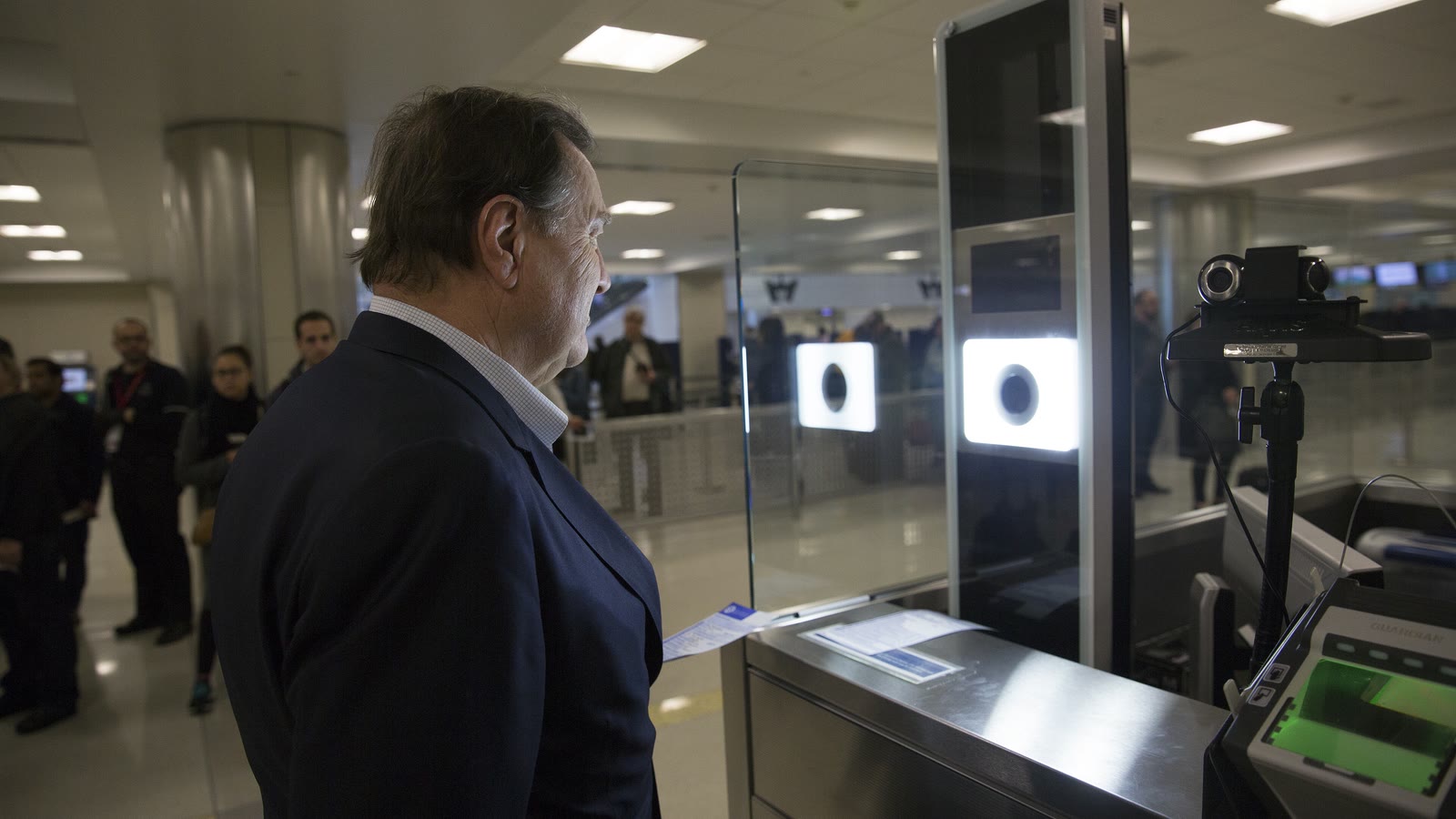
Since December 26, 2025, under a rule published in the Federal Register, DHS may require all non-U.S. citizens to be photographed on entry and exit, including at land and sea ports. According to the rule's summary, this also covers children under 14 and people over 79, who were previously exempt. So expect to be photographed when leaving the USA as well.
Searches of phones and laptops
CBP may carry out a basic search of a phone or laptop without suspicion; an advanced technical search requires reasonable suspicion. According to media reports based on CBP data, 55,318 devices were searched in fiscal year 2025 (October 2024 to September 2025), 17.6 percent more than in the previous year. That affected fewer than 1 in 10,000 arriving travelers. According to media reports, a new CBP directive dated January 1, 2026 also covers smartwatches, SIM cards and USB sticks. The German Foreign Office points out that devices may be retained and passwords may be requested. How the inspection works is described in U.S. airport entry: process, CBP and customs.
Travel advice from the German Foreign Office
The current version of the Foreign Office's travel and safety advice for the USA has been valid since October 30, 2026. The Foreign Office stresses that neither a valid ESTA authorization nor a valid U.S. visa gives you a right to enter the USA. According to the Foreign Office, criminal records in the USA, false statements about the purpose of travel and even minor overstays of the permitted period can lead to arrest, immigration detention and deportation on entry or exit. You should carry your passport, or a copy with the entry stamp, at all times.
Ebola entry ban
Since May 18, 2026, according to the U.S. Centers for Disease Control and Prevention (CDC), foreign nationals who have been in the Democratic Republic of the Congo, Uganda or South Sudan within the past 21 days may not enter, regardless of their nationality. The order is extended by 30 days at a time, most recently on November 10, 2026. According to the German Foreign Office, since November 3, 2026 all passengers have had to confirm in writing that they have not been in the DR Congo within the past 21 days; without this declaration, airlines refuse to carry them.
Important: The CBP officer decides on your admission when you arrive. Truthful statements that match your purpose of travel matter more than any new rule.
What you can do now
- Check your ESTA's validity. If your ESTA or your passport expires before your trip, apply for a new one in good time, no later than 72 hours before departure. The official application website of the U.S. authorities is esta.cbp.dhs.gov. A new passport always requires a new ESTA.
- Do not change your travel plans because of the deadline. As things stand, ESTA will continue to apply in 2027. Check this page before making larger bookings.
- Read the travel advice before departure. The German Foreign Office's advice can change at short notice, for example regarding health requirements.
- If in doubt, choose a visa instead of ESTA. If you have a criminal record, a previous refusal, a second nationality or travel to the countries listed above, a visa is often the safer route. Our Visa Check gives you an initial assessment.
- Plan your visa appointment early. If you need a visa, book the appointment with plenty of lead time and check the fees shortly beforehand.
- Get advice. For special cases, we offer individual consultation and support with the B-1/B-2 visa.
Changes to this page
- November 11, 2026: Page created. All information checked as of November 11, 2026.
After the EBSP deadline of December 31, 2026 has passed, this page will be updated in the first week of January 2027. If anything significant changes before then, for example the signing of the EU-US framework agreement, a DHS announcement on the Visa Waiver Program or the introduction of the social media requirement for ESTA, it will be logged here with the date.
Frequently asked questions
Will Germans need a visa for the USA from 2027?+
Not as things stand. As of November 11, 2026, neither the U.S. Department of Homeland Security (DHS) nor the U.S. Department of State has announced a suspension of visa-free travel for Germany. The December 31, 2026 deadline concerns a data-sharing agreement; according to the European Commission, DHS will then assess in its regular Visa Waiver Program reviews whether a country meets the requirement. This does not mean an automatic visa requirement.
What is the Enhanced Border Security Partnership (EBSP)?+
The EBSP is a border security partnership that the USA has required from all Visa Waiver Program countries since 2022. It is meant to enable the exchange of information, including biometric data such as fingerprints, on people travelling to the USA. The EU has negotiated a framework agreement for this, which had not been signed as of November 11, 2026; each member state then governs the actual exchange in its own agreement with the USA.
Will my ESTA remain valid after December 31, 2026?+
Yes, as things stand. An approved ESTA is valid for two years from approval or until your passport expires, whichever comes first. The year-end 2026 deadline concerns a data-sharing agreement and is not an expiry date for ESTA; the U.S. authorities have not announced any change (as of November 11, 2026).
Do I have to list my social media accounts in the ESTA application?+
No, as of November 11, 2026, this information is optional. U.S. Customs and Border Protection (CBP) proposed in the Federal Register on December 10, 2025 to make social media accounts from the past five years mandatory, but has not introduced the requirement. For certain visas, such as student and exchange visas (F, M, J), applicants are instead instructed to set their profiles to public for screening.
How much does ESTA cost at the moment?+
Since October 16, 2026, ESTA has cost 40.62 US dollars per application, or 10.62 US dollars if the application is denied. This is set out in a notice from the U.S. Department of Homeland Security published in the Federal Register on October 1, 2026. The fee is adjusted for inflation every year; an ESTA that has already been approved remains valid.
Does the U.S. travel ban also affect German dual nationals?+
Not if they travel on their German passport: Proclamation 10998, which has fully or partially suspended visa issuance for nationals of 39 countries since January 1, 2026, exempts dual nationals travelling on a passport from a country that is not listed. Separately, Germans who also hold the nationality of Iran, Iraq, North Korea, Sudan, Syria or Cuba cannot use ESTA and need a visa.
Can U.S. border officers search my phone?+
Yes. U.S. Customs and Border Protection (CBP) may carry out a basic search of electronic devices without suspicion, and an advanced technical search with reasonable suspicion. According to media reports based on CBP data, this affected fewer than 1 in 10,000 arriving travelers in fiscal year 2025. The German Foreign Office points out that devices may be retained and passwords may be requested.
Sources
- Proposal for a Council Decision on the signing and provisional application of the EU-US Framework Agreement on information exchange for border procedures and visa applications (COM(2026) 484, ST 13002/26) · Rat der Europäischen Union / Europäische Kommission
- Certain DHS Immigration-Related Fees Required by HR-1: Fiscal Year 2027 Adjustments for Inflation (FR Doc. 2026-20185) · Federal Register / U.S. Department of Homeland Security
- USA (Vereinigte Staaten): Reise- und Sicherheitshinweise · Auswärtiges Amt
- Agency Information Collection Activities; Revision; Arrival and Departure Record (Form I-94) and Electronic System for Travel Authorization (ESTA) (FR Doc. 2025-22461) · Federal Register / U.S. Customs and Border Protection
- Interview Waiver Update (September 18, 2025) · U.S. Department of State
- Executive Order 14385: Protecting the National Security and Welfare of the United States and Its Citizens From Criminal Actors and Other Public Safety Threats · Federal Register / Executive Office of the President
- Order Suspending Entry of Foreign Nationals Present in the DRC, Uganda or South Sudan (Ebola) · U.S. Centers for Disease Control and Prevention (CDC)
- Collection of Biometric Data From Aliens Upon Entry to and Departure From the United States (FR Doc. 2025-19655) · Federal Register / U.S. Department of Homeland Security
- Proclamation 10998: Restricting and Limiting the Entry of Foreign Nationals To Protect the Security of the United States · Federal Register / Executive Office of the President
Not sure what you need?
Find out in two minutes whether ESTA or a visa is right for you. We guide you personally through your visa application.
US-Visa-Service Redaktion
US entry & visa editorial team
Carefully researched and regularly reviewed. Non-binding guidance — the final decision on entry and visas rests solely with the US authorities.
Keep reading
ESTA or Visa – What Do I Need for the USA?
For short tourism or business trips, German citizens usually only need an ESTA. We explain step by step when you instead need a B‑1/B‑2 visa – with a comparison table and current 2026 fees.
Read
Applying for ESTA in 2026: A Step-by-Step Guide
How to apply for your ESTA correctly in 2026 on the official site – with all required data, the current 40.62 USD fee, processing times and tips when problems arise.
Read
ESTA Denied – What You Can Do Now
Your ESTA shows “Travel Not Authorized”? Learn what a denial really means, why there is no appeal, and how a B‑1/B‑2 visa can still get you to the U.S.
Read